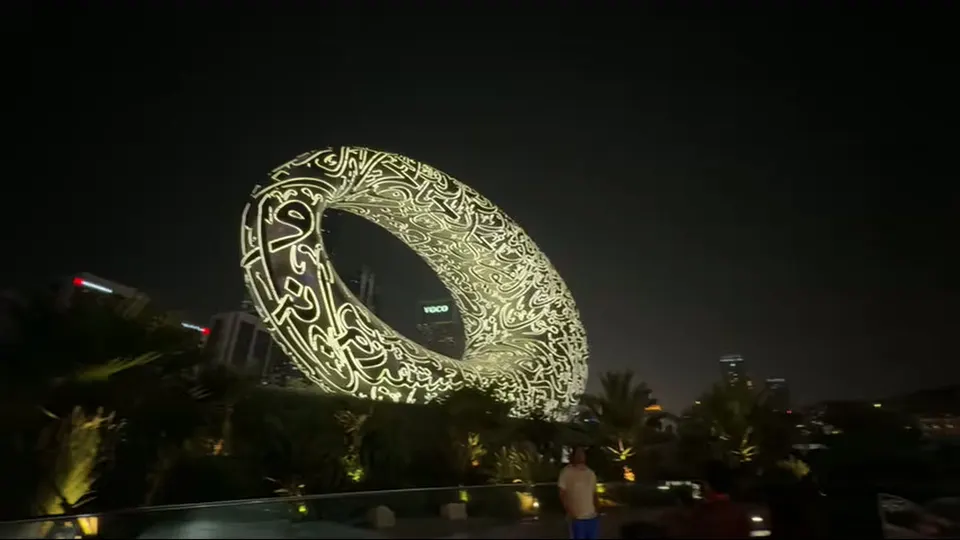
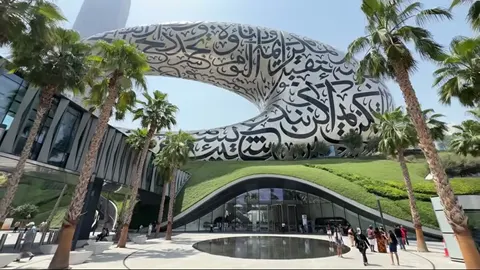
The Museum of the Future on Sheikh Zayed Road offers an immersive look at technological and ecological scenarios for the coming decades. Unlike traditional museums, this interactive space focuses on future concepts through visual and sensory installations rather than physical artifacts. A visit costs from 149 AED and typically takes 2–3 hours, making it suitable for families and architecture enthusiasts alike. Because the venue is highly popular, visitors should expect crowds. To avoid long queues and ensure a quieter experience, plan your visit for a weekday morning.
This museum is recommended for those who appreciate modern architecture and seek an aesthetic, immersive experience. It is particularly well-suited for families and travelers who value high-quality visuals and the "presence effect"—the opportunity to physically step into futuristic sets.
If your goal is to see the iconic symbols of modern Dubai and capture professional-grade content, this should be a priority on your itinerary.
Who should skip it
Consider skipping this visit if you expect a traditional exhibition rich in historical facts or in-depth technical analysis; the focus here is on emotional impact rather than hard science.
The format is also unsuitable for spontaneous travelers, as tickets must be booked 2–3 weeks in advance and the experience follows a strict route through heavy foot traffic.
Practical advice: Opt for morning slots on weekdays to explore the halls before peak attendance, and allow extra time for the long walk from the metro station.
What to know beforehand
The Museum of the Future functions more like a large-scale immersive performance than a traditional science museum. Practically speaking, the tour follows a strictly linear route from the top floor down; you cannot return to a previous hall or the outdoor observation deck once you have moved on.
This requires visitors to manage their time carefully for photos and installations, as the steady flow of people naturally pushes you toward the next level.
This format is ideal for families and those who value visual aesthetics and interactive elements. However, visitors expecting a deep dive into applied sciences or technical engineering prototypes may be disappointed.
The exhibition appeals primarily to emotion and imagination, offering an artistic vision of the future rather than a technical manual. If you are looking for a serious scientific experience, the museum may feel too entertainment-focused and superficial.
🎫 Tickets, tours & discounts
Standard Ticket
From 149 AED
Access to all main halls
linear route
the best choice for most visitors.
Priority / Open Date
Premium pricing
Increased flexibility
useful for unpredictable schedules
justified during peak dates.
How to Choose Your Ticket Type
Selecting a ticket for the Museum of the Future is a matter of scheduling rather than choosing between service levels. A standard entry ticket provides full access to every floor, including the orbital station, the DNA library, and the viewing platform.
Because the exhibition is designed as a linear immersive experience, all guests receive the same sensory journey, making the basic fare the most practical choice.
Standard Ticket: The best option for most visitors. It grants access to all galleries and installations, provided you arrive during your selected time slot.
Priority or Open-Date Tickets: These are only worth the extra cost if your schedule is highly unpredictable or if you are visiting during peak public holidays when entry queues are longest.
The biggest mistake travelers make is planning a spontaneous visit. Tickets for preferred time slots typically sell out two to three weeks in advance. Attempting to buy them at the box office on the day of your visit almost always results in disappointment. For a quieter experience, book morning slots on weekdays.
Crowds peak in the evening, which can detract from the more meditative zones of the museum.
Practical Tip: Allow an extra 15 to 20 minutes for the walk from the Emirates Towers metro station. The covered bridge is long, and entry is strictly timed. Arriving late will cause unnecessary stress, as the linear layout of the museum means you cannot return to floors you have missed.
Selecting a ticket for the Museum of the Future is a matter of time management rather than seeking additional services. The standard rate, starting at 149 AED, is the most practical choice for the majority of travelers.
It provides full access to all primary exhibits, including the orbital station, the DNA library, futuristic installations, and the observation deck. Since every guest shares the same sensory experience, a standard ticket with a fixed time slot is sufficient for a complete visit.
Paying extra for open-date or priority entry is only worthwhile in specific circumstances. These options are justified if your Dubai itinerary is highly unpredictable or if you are visiting during peak holidays when entrance queues become significant.
In most other cases, premium tickets offer no major advantages, as the museum layout is linear and all visitors move through the same halls in sequence.
The biggest risk to your budget and schedule is attempting to buy tickets on the day of your visit or just a few days prior. Due to the museum's popularity, available time slots often sell out two to three weeks in advance. Trying to purchase tickets at the box office is almost always unsuccessful.
To avoid wasting money, factor in the logistics: the walk from the metro station via the covered bridge takes approximately 15 minutes. Being late for your designated slot may result in your entry being canceled, as the flow of visitors is strictly regulated.
Good weather, but museums are comfortable regardless — no weather dependency.
Crowd indicator
Mini-calculator based on crowd levels by day and time.
When to go?
Mini-calculator based on crowd levels by day and time.
Best time at Mon — 10:00
This day has average visitor density. This slot has a higher chance of a comfortable visit: fewer people and calmer pace.
30–50% · Quiet60–80% · Moderate90–100% · Crowded
Nearest days
Today
10:00
50%
12:00
66%
14:00
80%
16:00
85%
17:00
89%
18:00
87%
Tomorrow
10:00
49%
12:00
65%
14:00
79%
16:00
84%
17:00
88%
18:00
86%
Day after tomorrow
10:00
47%
12:00
63%
14:00
77%
16:00
83%
17:00
87%
18:00
85%
How to get there
Nearest stationEmirates Towers
AddressSheikh Zayed Road, Trade Centre 2, Trade Centre
Route accessibilityThe venue offers barrier-free access and clear indoor signage, but it is best to plan your route from the metro and the surrounding road junctions in advance.
How to find the entrance
The most convenient way to reach the museum is from the Emirates Towers metro station. A direct, air-conditioned walkway leads from the station to the building, providing full protection from the heat. However, the walk takes about 15 minutes and can feel quite long.
Allow for this extra travel time from the metro platform to ensure you do not miss your designated entry slot.
Even if you have booked your tickets weeks in advance, expect a queue at the entrance. This is a standard part of the check-in and crowd management process, so do not be concerned by a wait in the lobby. Be aware that entry without a prior reservation is nearly impossible, as tickets typically sell out far in advance.
Your visit begins with a specialized elevator ride simulating a flight into orbit. From that point, the exhibition follows a strictly linear path, moving from the top floors down to the bottom. You will not be able to return to previous halls or the observation deck once you have left them.
Spend as much time as you need in each zone and take all your photos before moving to the next stage of the tour.
Practical limits & what to bring
The primary obstacle for a spontaneous visit is the shortage of tickets; you must book at least two to three weeks in advance. Even with a confirmed time slot, be prepared for entry queues and heavy foot traffic in popular galleries, which can make finding clear photo angles difficult. To avoid the largest crowds, schedule your visit for weekday mornings.
Logistics require extra time and energy. The walk from the Emirates Towers metro station involves a long, covered bridge and takes approximately 15 minutes—keep this in mind to ensure you arrive on time for your session. Inside, the museum follows a strict linear path from the upper floors down to the lower levels.
You cannot return to a previous zone or the observation deck once you have moved to the next level, so inspect each location thoroughly before moving on.
While the building features a barrier-free environment and clear navigation, the exhibition format focuses more on visual and sensory impressions than in-depth technological study. Visitors expecting detailed scientific blueprints or complex prototypes may find the displays more entertainment-oriented than academic.
This is a space dedicated to the imagery and atmosphere of the future, with a heavy emphasis on immersion and aesthetics.
Location and what's nearby
The museum occupies a strategic position on Sheikh Zayed Road in the heart of Dubai's business district. Its proximity to the Emirates Towers metro station makes it one of the most accessible attractions for those using public transport.
However, visitors should note that the walk from the metro platform to the entrance involves a long, climate-controlled footbridge. This walk adds 10 to 15 minutes to your transit time—a critical detail to factor into your schedule to ensure you do not miss your strictly timed entry slot.
The location fits seamlessly into a central Dubai itinerary. The museum is situated just two metro stops from Downtown, the Burj Khalifa, and Dubai Mall, and is in the immediate vicinity of the Dubai International Financial Centre (DIFC).
As this is a high-traffic area dominated by skyscrapers, it is best to plan your visit for the first half of the day when crowds are thinner. The excellent transport links then allow for an easy transition to the evening fountain shows or shopping centers.
Because the museum operates on a precise schedule with a sequential tour, it serves as a reliable anchor for your daily plans. While there are no parks or pedestrian walking zones in the immediate surroundings, the direct connection to the Metro Red Line ensures you can easily continue your route in any direction.
This makes the site a convenient stop for those looking to see Dubai’s major architectural landmarks without dealing with complex logistics between locations.
Reference
Facts
Read more
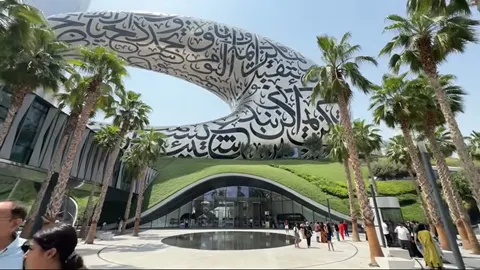
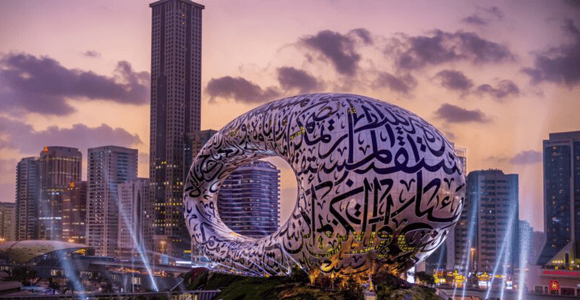
The Museum of the Future replaces traditional display cases with an immersive narrative where the silver ring-shaped architecture is integral to the exhibition.
The visitor experience follows a strictly linear path, beginning with a simulated shuttle launch to an orbital station and descending through digital jungles and meditation halls.
This structure does not allow for backtracking, so key highlights—such as the open observation deck located within the inner curve of the steel facade—must be visited as you encounter them.
High demand requires strict planning: tickets should be booked two to three weeks in advance. Travelers should also allow at least 15 minutes to reach the entrance from the Emirates Towers metro station via the covered bridge.
Tickets start at 149 AED for a two-to-three-hour experience that prioritizes visual and sensory immersion over technical blueprints or prototypes. The result is a unique space where futurology is presented as a large-scale art installation, isolating visitors from the noise of the surrounding metropolis.
Background
History
Read more
The Museum of the Future was designed not as a traditional repository for artifacts, but as an intellectual hub and "living laboratory" for modeling tomorrow's scenarios. Its establishment marks a significant phase in Dubai’s strategy to secure its position as a global innovation hub.
The project embodies the idea that the future is not predetermined; instead, it is actively shaped by humanity through technology, ecology, and social change.
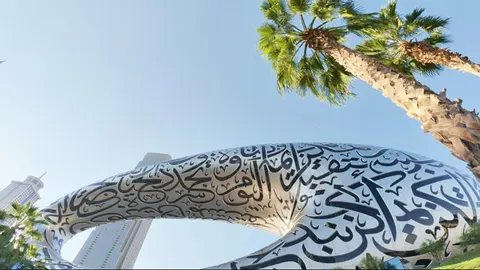
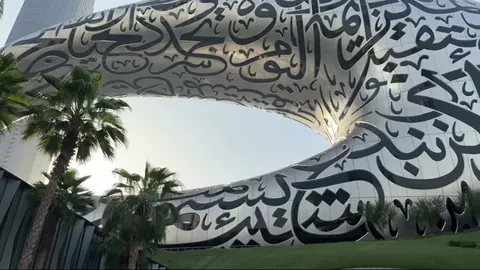
The building's architecture functions as the primary exhibit, communicating the site's core philosophy. The futuristic steel facade, decorated with Arabic calligraphy, blends regional cultural traditions with cutting-edge engineering.
The void in the center of the structure symbolizes the unknown and everything that remains to be discovered. This building serves as a statement on modern thought, proving that architecture can be more than just a shell—it is a testament to the capabilities of the human mind.
For the visitor, the museum is a space where complex scientific forecasts and environmental challenges take on a tangible, immersive form. The emphasis here shifts from studying the past to a personal experience of a possible future.
A visit helps you relate global technological trends to your own life and see the direction in which modern civilization is moving beyond the typical urban environment.
Reliability & freshness
AuthorCity Guides Team
PublishedMarch 20, 2026
UpdatedApril 19, 2026
FAQ
Should I book tickets in advance?
Yes, it is advisable to purchase tickets 2–3 weeks before your visit, as time slots sell out quickly.
How do I reach the museum via public transport?
Take the metro to Emirates Towers Station and allow about 15 minutes to walk through the covered bridge to the building.
When is the best time to visit to avoid crowds?
It is best to plan your visit for weekday mornings to avoid long queues in the most popular halls.
How much time should I set aside for the tour?
A visit usually takes 2–3 hours, following a linear route from the top floors down to the bottom.
Can I return to a gallery I liked later?
No, the museum has a one-way flow, so be sure to fully explore each zone and observation deck as you pass through.